For many couples planning a destination wedding in Sicily, food is initially treated as one part of the reception. In reality, it often does much more than that. It helps define the character of the day.
This is the right place to begin. In Sicily, the table is not there simply to feed your guests well. It gives shape to time. It slows people down, keeps them present, and turns the reception into something more than a sequence of formal moments. That is why speaking about local food does not mean speaking about tradition in a generic sense. It means understanding what makes a wedding day feel more believable, more coherent, and less constructed.
Mediterranean cuisine here is not a label. It is a real presence. You feel it in the way olive oil, vegetables, bread, olives, fish, citrus, herbs, cheeses and desserts arrive at the table. You feel it in the apparent simplicity of the ingredients, in the lightness of certain dishes, and in the way substance and ease can exist together without trying to impress. This is what many couples are really looking for when they choose Sicily: not a “typical menu” to display, but a table that genuinely belongs to the place.
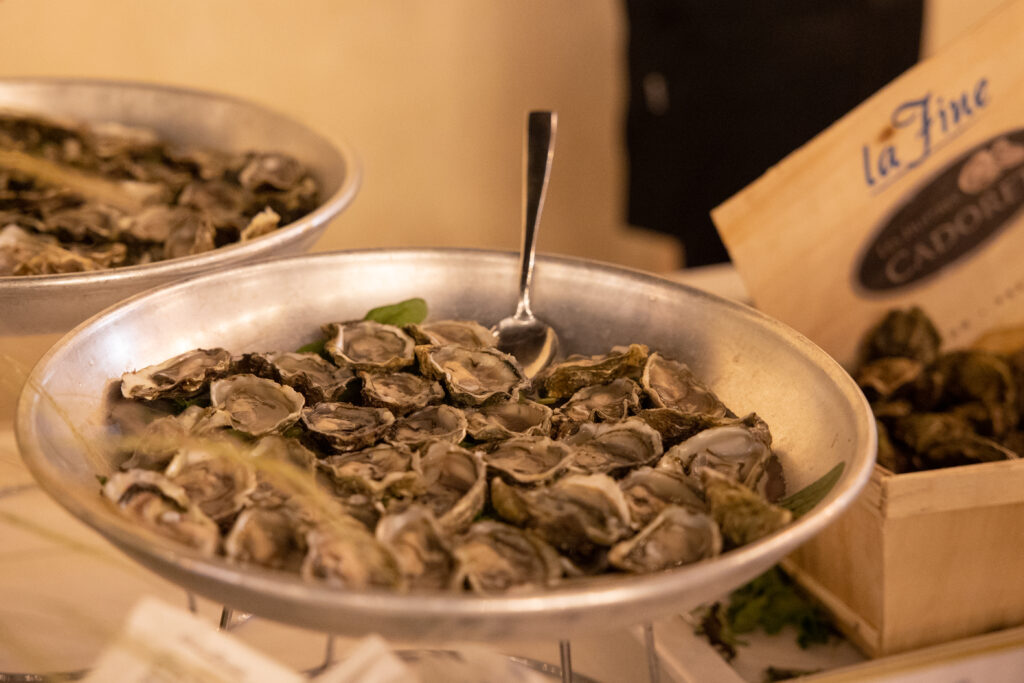
Local food works when it is not used as cultural decoration. It works when it actually belongs to the territory and to the season. A reception built around cheeses such as Ragusano, Pecorino Siciliano, Provola Iblea or fresh ricotta, around cured meats from the Nebrodi area, olives, olive oil and seasonal vegetables, and then opening itself to the sea with tuna, swordfish or red prawns from Mazara, does not feel convincing because it lists Sicilian products. It feels convincing because it speaks the language of the place without having to perform it.
That is the important difference. Local food should not be there to tell guests that they are in Sicily. They should understand it on their own, simply by sitting at the table.
The table is not an interlude
In many weddings, the reception is treated as something that needs to function efficiently. In Sicily, it usually has a different role. It needs to hold people there. It needs to create the sense that guests are inside a full, lived stretch of time, not inside a programme.
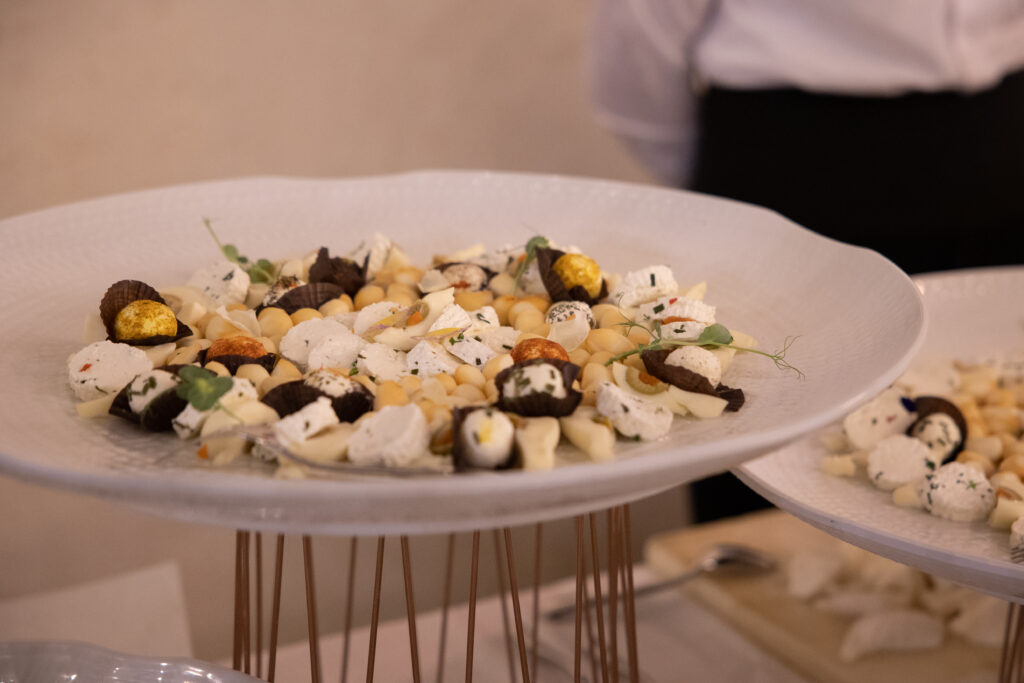
Food matters here because it regulates rhythm. A well-built aperitivo is not just a pleasant opening. It is the moment when the wedding truly opens itself to the presence of others. A table that does not rush, that leaves space, that alternates movement and pause, changes the quality of the day much more than many aesthetic decisions ever could. In that sense, local food and Mediterranean cuisine are not a frame around the reception. They are part of its language.
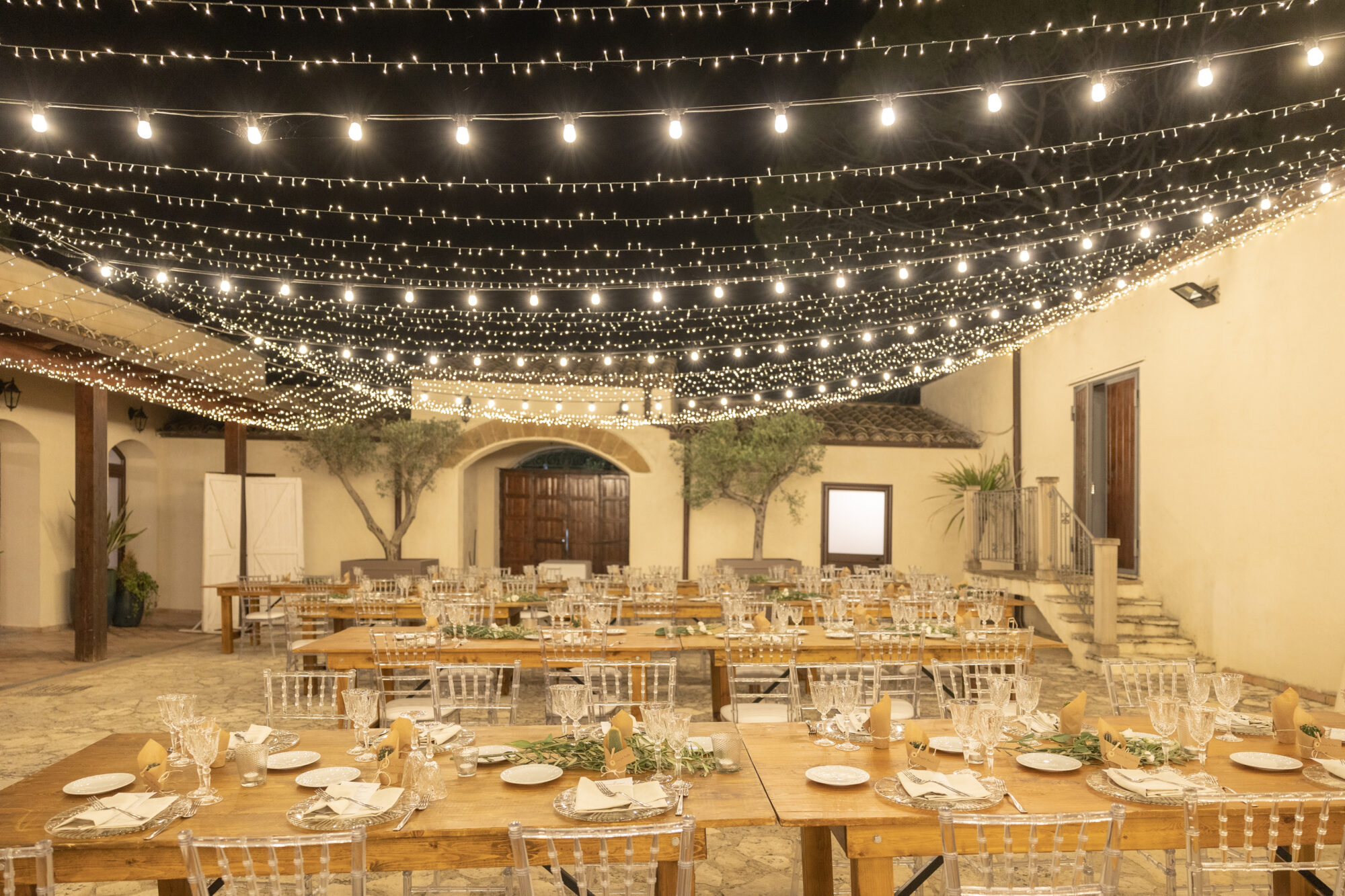
This is why the real point is not the menu itself. The real point is permanence. When chosen well, local food helps create exactly that. It makes the reception feel less generic, less standardised, less like a format that could happen anywhere. In Sicily this matters even more, because the context already has its own strength: light, air, material, time. If the table does not enter into dialogue with all of that, it is immediately noticeable.
Even short supply chains, or what people often call farm-to-table, only make sense when they are brought back to this concrete level. They are not slogans. They are a way of reducing force. They allow what arrives at the table to belong to that territory, that moment of the year, that specific day. When that happens, the food stops feeling selected and begins to feel right.
Local does not mean folkloric
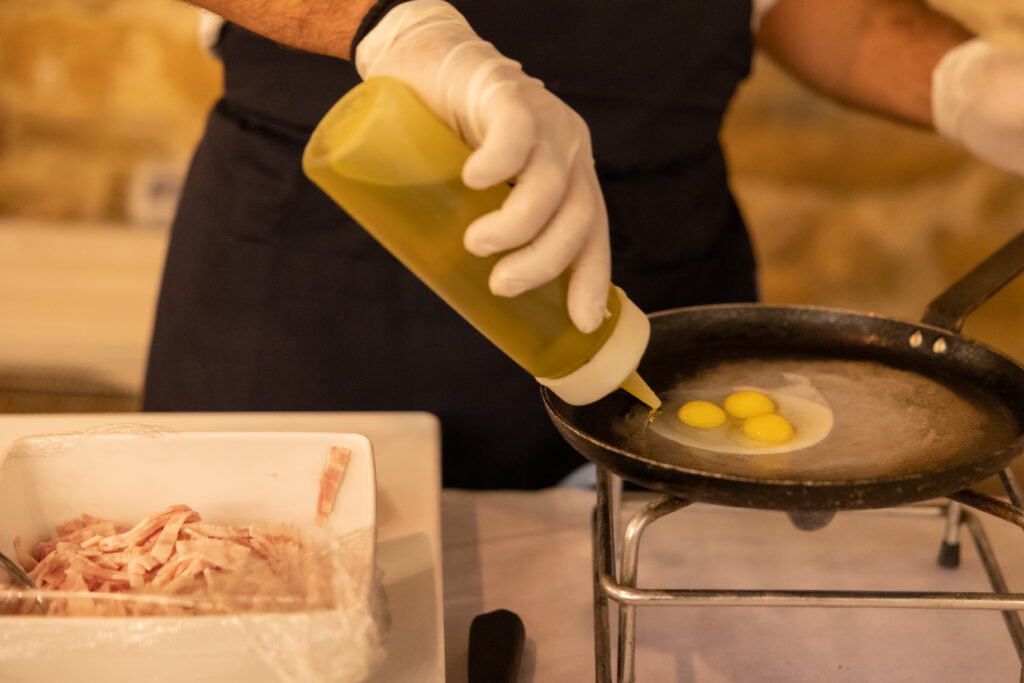
This point matters, because it is where many receptions lose their tone. Using Sicilian ingredients does not mean turning the wedding into a statement of typicity. It does not mean building a table overloaded with symbols. It means making a few credible choices.
That applies to savoury food, but also to the ending of the meal. Cannoli, cassata, granita, fruit and local desserts make sense when they appear at the right moment and in the right measure. Here too, the issue is not the object itself, but the way it enters the rhythm of the reception. A granita at a summer wedding can make far more sense than a heavy ending. A well-built dessert table can carry the evening better than a display designed only to impress.
The same logic applies to the things that move visually from the kitchen onto the table. Citrus, herbs, grapes, figs, pomegranates, bread, olive oil, ceramics, wood, glass. In Sicily, it does not take much for the place to be felt. But that little must remain restrained, not theatrical. The moment the local is forced, it becomes illustration. And once it becomes illustration, it loses force.
For this reason, local food should not be treated as a separate element. It should be considered together with the season, the venue, the type of reception, the schedule, the temperature and the actual duration of the day. It is part of the wedding’s language, not an addition. For couples planning a wedding in Sicily, or a destination wedding in Italy more broadly, it is also one of the clearest ways to understand Sicilian culture without reducing it to image.
In the end, the conclusion is simple. The Sicilian table does not make a wedding memorable because it is abundant or recognisable. It becomes memorable when it manages to do something more difficult: hold together place, time and people without anything feeling forced.
And that is the point at which local food stops being a detail. It becomes one of the reasons the day stays with you.