When images grow out of experience
One of the most common concerns couples share when talking about wedding photography is simple and honest: “Will we spend the whole day taking photos?”
It is a legitimate fear. No one wants an intimate and meaningful day to turn into a sequence of interruptions, instructions and staged moments. When photography becomes too central, the risk is that the wedding itself slowly fades into the background.
Living a wedding without constantly thinking about photographs does not mean giving up on images. It means redefining their place within the day. The difference is not between taking photos or not taking them, but in the weight photography carries within the experience.
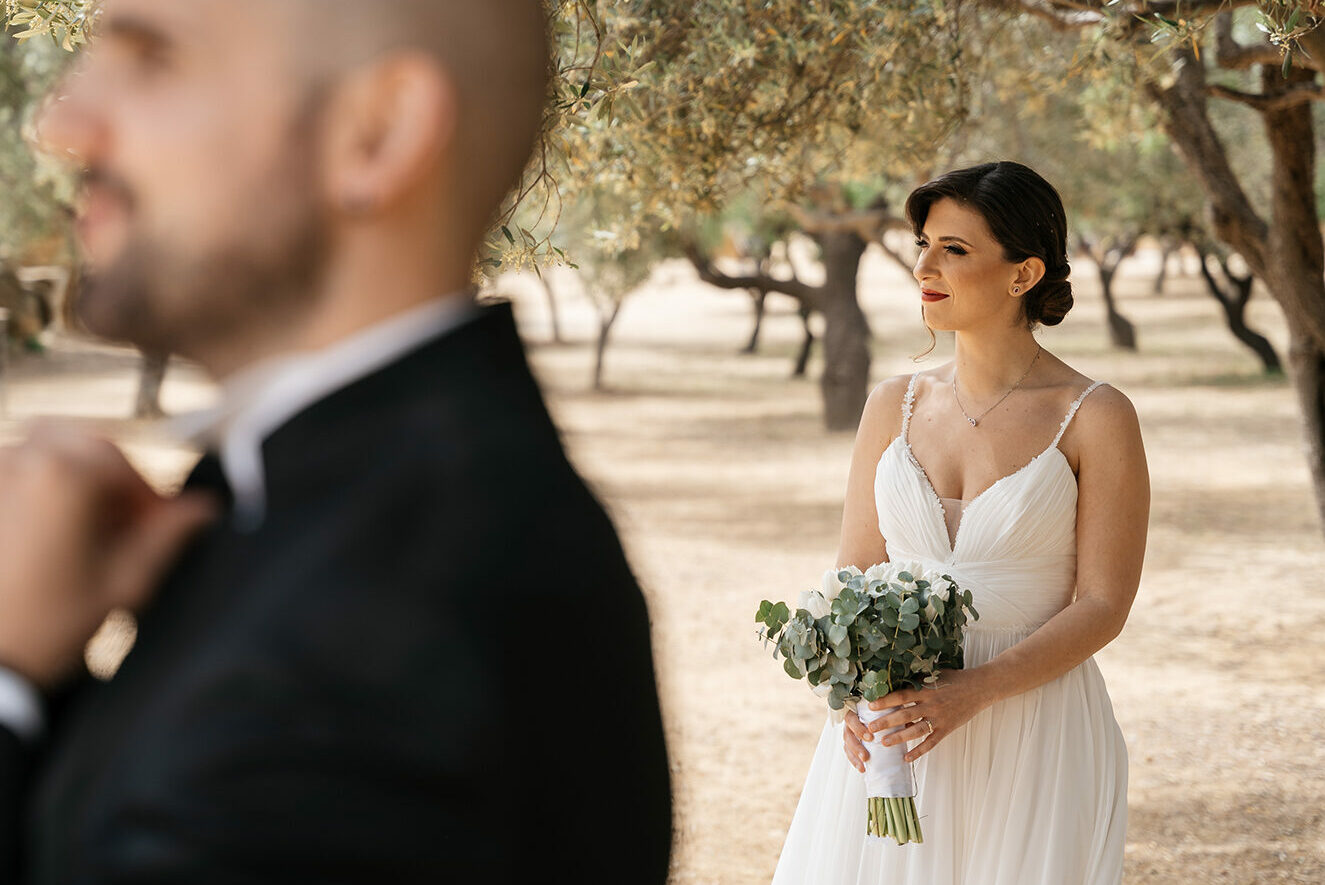
Photography can coexist naturally with the flow of a wedding day when it stops behaving like a single, dominant block of time and becomes something lighter and more distributed. Often, a few minutes are enough. Five quiet minutes, taken calmly, in a peaceful moment, without pressure or an audience. Small pauses that open and close gently, without tearing the rhythm of the day.
When these moments are integrated thoughtfully, they do not feel like something taken away. They do not interrupt the atmosphere. They respect it. The issue is never the time dedicated to photographs, but the moment when that time becomes rigid, centralised, intrusive. When the day is forced to adapt to photography, instead of the other way around.
A common misconception is that carefully crafted images require the wedding to be staged. But when photography takes too much space, the day risks resembling the rehearsal of a film rather than a real wedding. Or a theatrical performance where every pause breaks the emotional continuity instead of strengthening it.
In a balanced narrative, more constructed images do not dominate the scene. They appear when the atmosphere allows it, when people are present rather than alert, when light and context naturally suggest a pause. Even posing, when it exists, does not need to become a performance. It can remain brief, quiet, almost secondary to what truly matters.
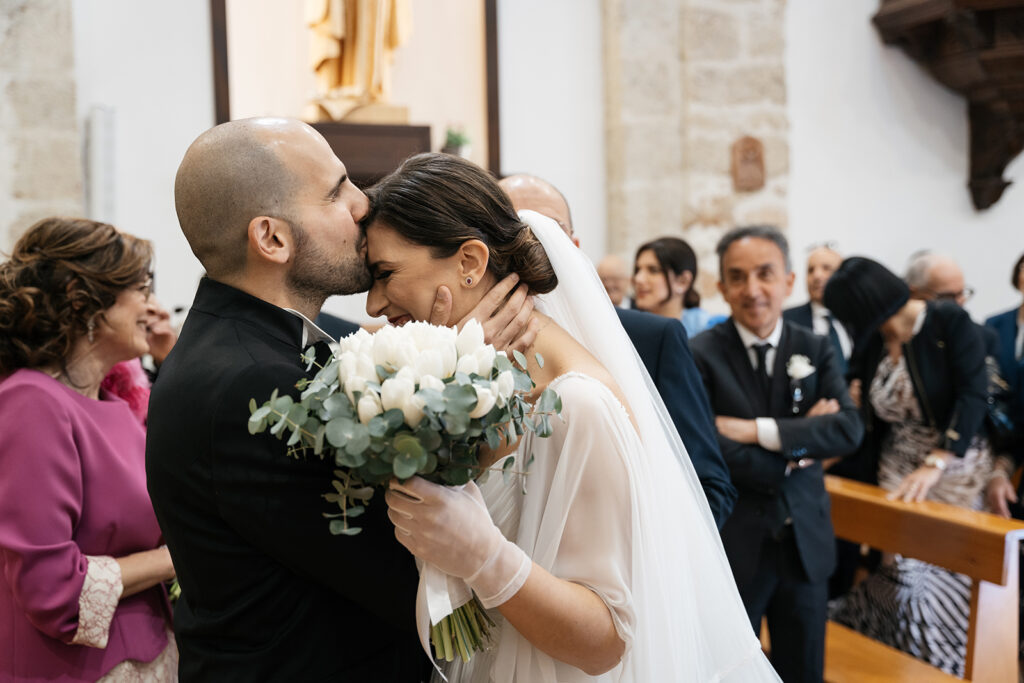
When photography steps back from being an objective and returns to being a language, the day flows with greater continuity. People no longer feel observed, but accompanied. The photographer is not a director, but a presence capable of being within the day, reading moments rather than imposing them.
This approach does not eliminate intention or care. It simply puts them in the right place. Images are no longer driven by the pressure of having to produce something, but by attention to what is unfolding. And it is often within these unforced spaces that the most meaningful photographs take shape.
There is also a quieter, deeper aspect to consider. The way a wedding is lived directly shapes how it will be remembered. A fragmented day tends to leave fragmented memories. A day lived with presence and continuity allows photographs to become a natural extension of memory, not a substitute for it.
For this reason, photography should never be the centre of a wedding. It should remain light, respectful, capable of waiting. When this balance is found, images come later, carrying not only what was seen, but how it was lived.
Choosing an approach that allows couples to live their wedding without constantly thinking about photography is a choice that requires trust. Trust in time, in people, in the idea that not everything needs to be directed in order to be remembered. It is not a matter of style or promises, but of experience.
And often, it is this quiet difference that allows a wedding to remain what it truly is. Not a performance. Not a spectacle. But a real day, one that photographs are able to tell precisely because they never tried to dominate it.