Film photography in the story of a wedding
We live in a time where everything is immediate. Images are created, shared and forgotten within seconds, often before they have truly been understood. Wedding photography is no exception. It is sometimes experienced as something to be produced quickly, checked instantly, controlled in real time. In this context, the photographic gesture risks losing depth, becoming a continuous sequence of possibilities rather than a conscious choice.
There is, however, another way of photographing. A quieter and less visible way, which has little to do with nostalgia and everything to do with attention. A way of being present within the day that values listening over reacting, understanding over urgency, and presence over constant production.
Film photography grows out of this need. Not as an alternative to digital, nor as an aesthetic statement, but as a methodological choice. A choice that concerns time, intention, and the way a photographer decides to stay within a wedding day, inhabiting its rhythm rather than directing it.
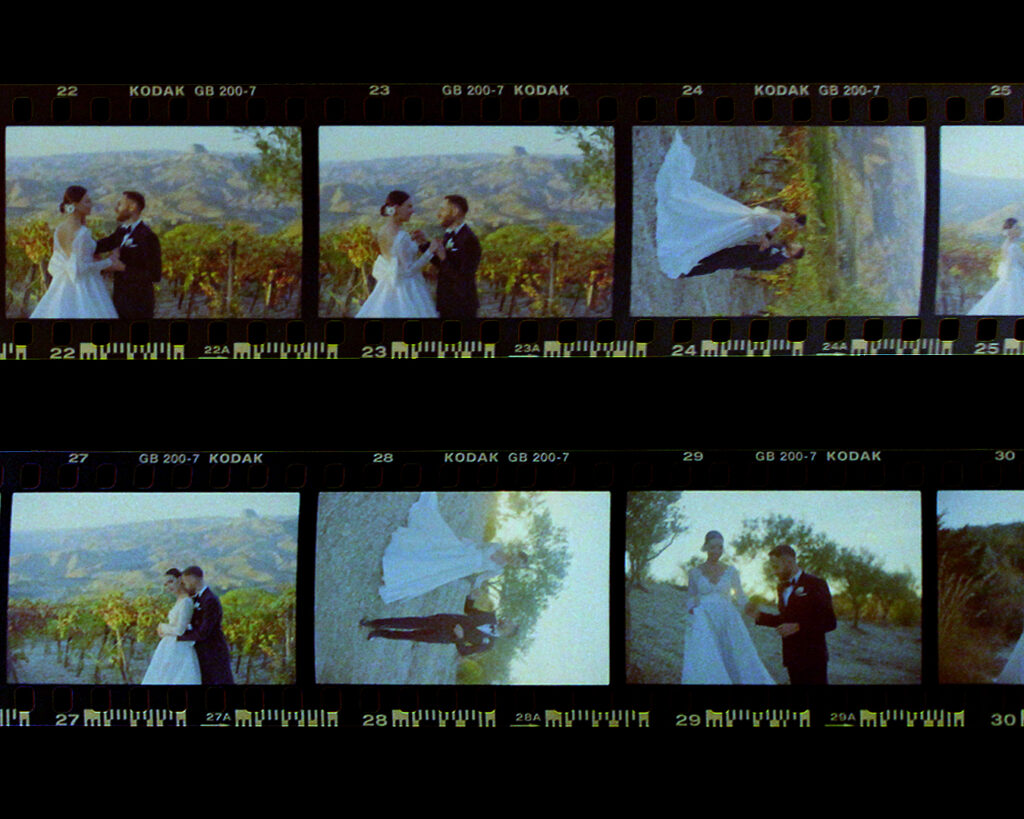
Working with film means working with a finite number of frames. This limitation is not a weakness, but a form of clarity. Each image exists because it was chosen, not because it was simply possible to take it. In a wedding, this changes the way one observes. Attention sharpens, instinct is trained to listen, and the photographer learns to recognise what truly matters. The story is not slowed down. It becomes more precise. Each photograph carries weight, because it comes from a moment recognised as essential, not interchangeable.
Time, attention and presence
Film also introduces a natural distance between what happens and what is seen. There is no instant review and no immediate correction. This space of waiting reshapes the relationship with reality and requires trust in one’s own gaze. During a wedding, this distance becomes an ally. It allows the photographer to remain present without interrupting the flow of events and to observe without constantly drawing attention toward the image. People are not guided toward the photograph. They are left free to live what is unfolding. In this way, the story preserves the authentic rhythm of the day.
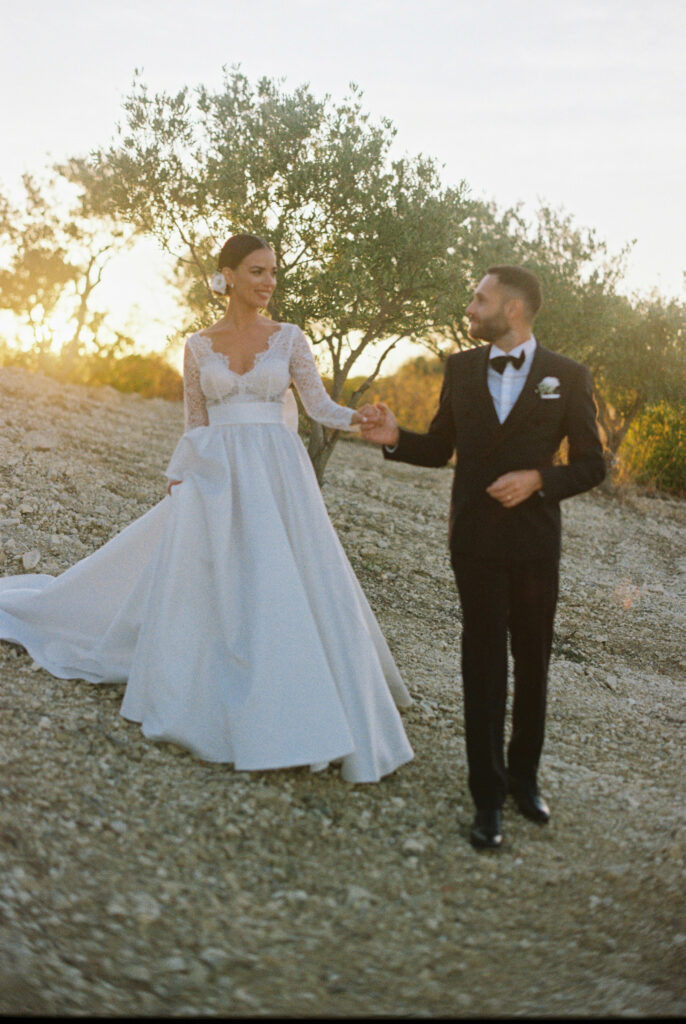
One of the most common risks in wedding photography is becoming an intrusive presence. Not through excessive movement, but through a lack of listening. Analog photography, by its nature, requires time. Time to observe, to read the light, to understand people and the space they inhabit. This time does not necessarily lead to a more spontaneous narrative. At certain moments it supports observation. At others it makes room for a more editorial construction, built on calm, balance and attention to form. Even posing, when present, grows out of this slowness. Not as an imposition, but as a measured gesture, integrated into the rhythm of the day. The result is not a choice between documentary and editorial, but a story that alternates listening and intervention according to what each moment requires.
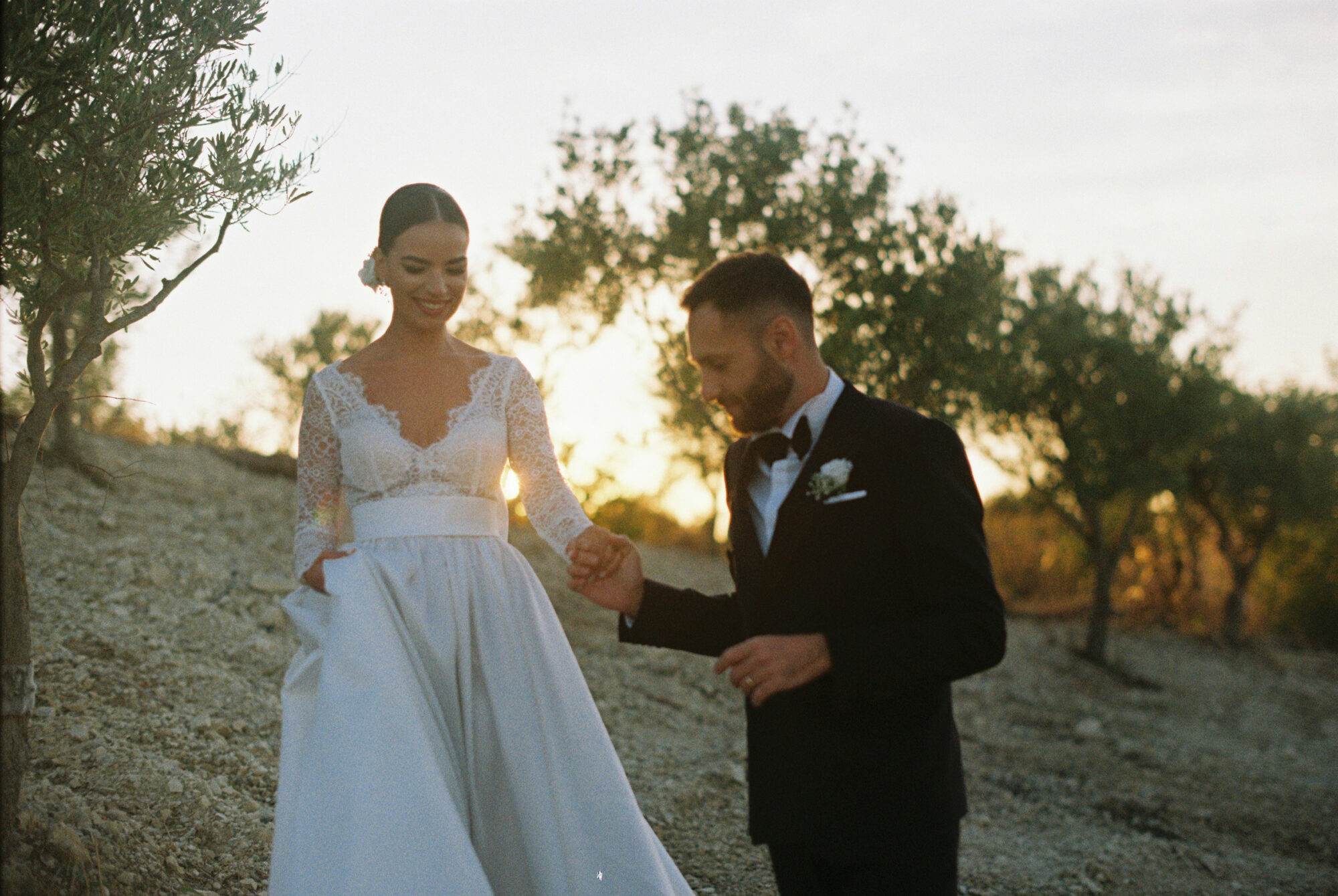
Film does not pursue formal perfection. It accepts variations in light, grain and subtle shifts in colour. These elements are not flaws. They are traces of time and context. In a wedding, this means embracing complexity rather than simplifying it. Each situation is allowed to exist as it is, without the urgency to make everything flawless or uniform. The resulting story is closer to memory than illustration. Less idealised, more truthful, capable of conveying feeling before perfection.
Choosing analog photography is not about pursuing a particular aesthetic. It is about shaping a different experience before producing different images. For couples, this often translates into a less invasive presence, a more natural pace, and a day lived without the sensation of constantly performing for the camera. The photographs come later. And when they do, they carry not only what was seen, but how it was lived.
Analog wedding photography is not for everyone, and it does not need to be. It is a choice that requires trust, time, and an affinity with the idea of leaving space for things to unfold. For those who recognise themselves in this way of seeing, it becomes a powerful tool. Not to stand out, but to remain faithful to what truly matters. Sometimes, to tell a story well, slowing down is enough.